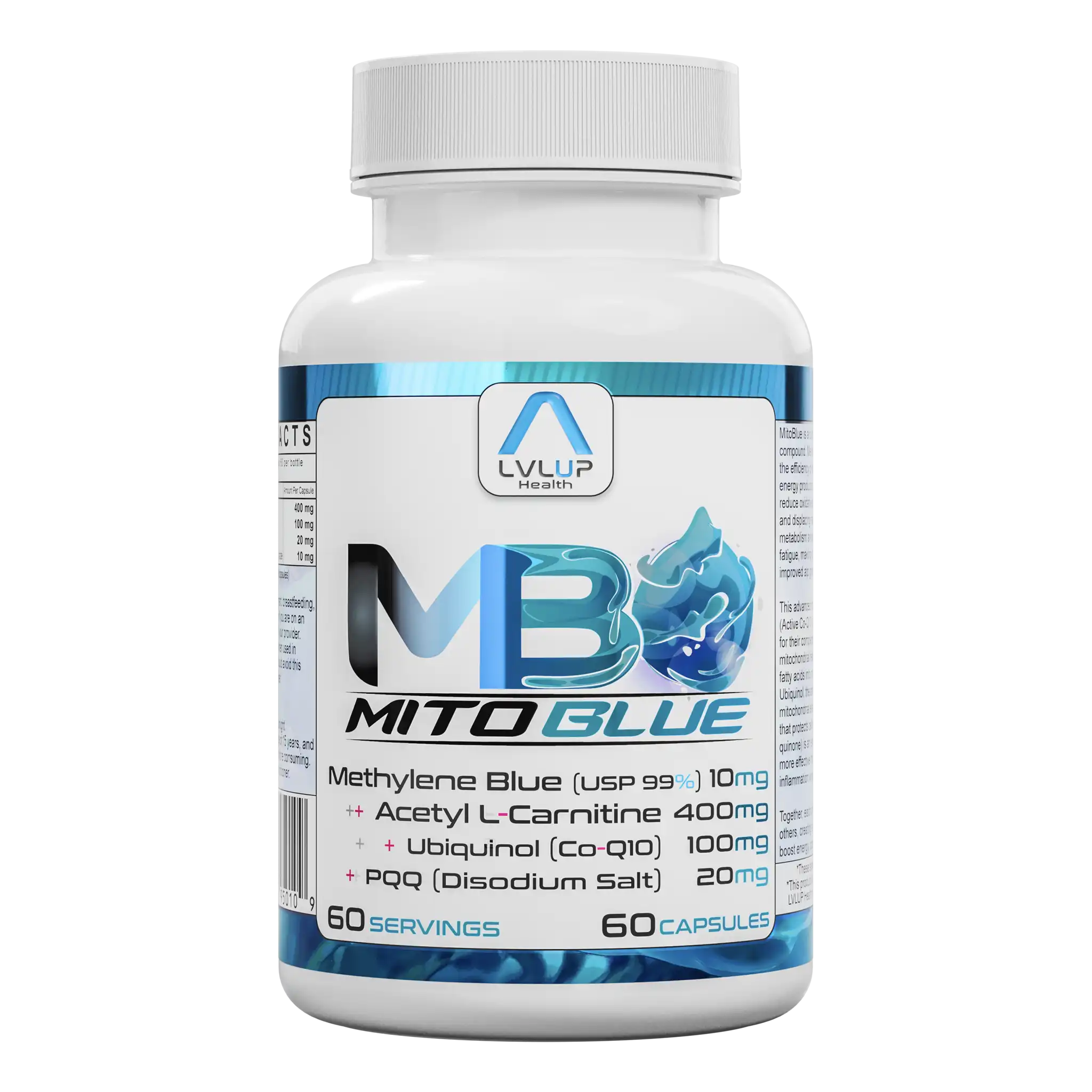

What Is Methylene Blue?
Methylene Blue (MB) is a laboratory dye and redox active compound widely used in mitochondrial, neuroprotection, and cellular energy research. Its ability to act as an alternative electron carrier in the mitochondrial electron transport chain makes it a useful research tool for studying mitochondrial efficiency, oxidative stress, and cellular energy signaling in experimental models.
Mechanisms of Action
Redox cycle as an electron donor and acceptor, bypassing dysfunctional ETC components, especially Complex I and III, in certain models
Support mitochondrial function by acting as a pseudo NADH oxidase, helping maintain mitochondrial membrane potential and ATP output signals
Reduce reactive oxygen species formation and protect mitochondrial DNA from oxidative insults in oxidative stress paradigms
Exhibit weak reversible MAO A inhibition at higher concentrations, with low dose ranges typically below strong MAO related thresholds
Modulate nitric oxide related pathways by inhibiting NO synthase signaling, relevant to inflammation and vascular tone models
Benefits
Increased ATP production signals
Improved mitochondrial respiration metrics
Enhanced memory retention in animal models
Reduced oxidative stress markers
Improved neuronal survival endpoints
Faster recovery after stress exposure in select paradigms
Higher baseline cellular energy related measures in some models
Dosing
Strength | Dose |
|---|---|
Low | 5 to 10 mg per day |
Medium | 10 to 20 mg per day |
High | 20 mg per day or higher |
Low dose use is often treated as the lower interaction risk range in research designs, while higher exposure ranges are where MAO and serotonergic considerations become more relevant.
Safety Profile
Side effects reported include:
Mild gastrointestinal discomfort
Head pressure
Insomnia at higher doses
Agitation in high redox states
Serotonergic interaction potential at excessive concentrations
Urine or stool discoloration (blue)
Low dose Methylene Blue generally shows favorable tolerability across many, but effects remain dose dependent and context dependent.
Stacking
Mitochondria and Energy Stack:
MOTS-c
NAD+
5-Amino-1MQ
Humanin
Neuroprotection and Cognition Stack:
Dihexa
Cerebrolysin or cerebroprotein hydrolysate
SS-31
Semax
Selank
Anti Aging and Repair Stack:
Epithalon
GHK-Cu and related blends such as GLOW or KLOW
Crystagen
Humanin
Cautionary Stack Avoidance Notes:
High dose serotonergic compounds such as SSRIs
Strong MAO inhibitors
High dose stimulants
Disclaimer: The information provided is intended solely for educational purposes and should not be considered a replacement for professional medical advice. All compounds referenced are not for human consumption.