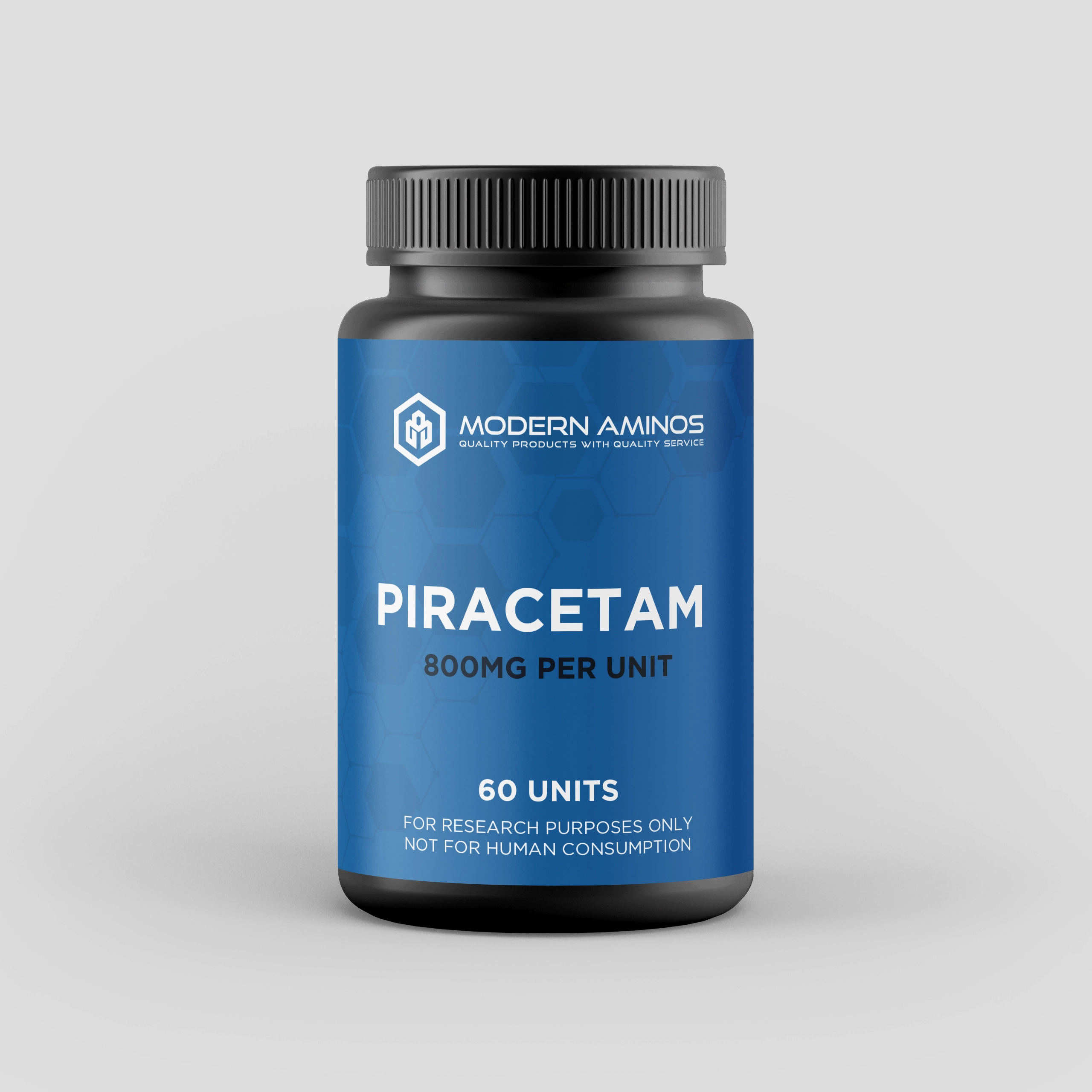

What is Piracetam?
Piracetam is a synthetic nootropic from the racetam family that was first developed in the 1960s and is often discussed as one of the original “smart drug” style compounds. In research and nootropic communities, it is primarily used for cognition support, especially memory, learning, and overall mental performance. While its exact mechanism is not fully established, it is commonly described as a compound that supports neurotransmission efficiency and brain energy utilization.
Mechanisms of Action
Enhancing neurotransmitter activity: Modulates neurotransmitter systems, especially acetylcholine and glutamate, and is associated with improved synaptic signaling and neuronal communication.
Improving brain blood flow: Linked to increased cerebral blood flow and improved oxygen and glucose delivery, which may support mental energy and cognitive performance.
Boosting neuroplasticity signals: Associated with improved synaptic adaptability and learning related pathways.
Enhancing membrane fluidity: Described as stabilizing neuronal cell membranes, which may improve signaling efficiency.
Benefits
Memory enhancement: Often used to support short term and long term memory performance.
Increased learning ability: Frequently associated with improved ability to process and retain new information.
Neuroprotection support: Discussed for antioxidant and brain cell protection related signaling.
Improved focus and mental clarity: Often used for sustained attention and concentration.
Potential support in cognitive decline models: Studied in dementia and Alzheimer’s related contexts, though results and real world utility are debated.
Dosing
Strength | Dose |
|---|---|
Low | 800 to 1,200 mg per day |
Medium | 1,200 to 2,400 mg per day |
High | 2,400 to 4,800 mg per day |
Note: Many researchers split the daily amount into 2 to 3 doses to keep effects more consistent. A frequently mentioned starting approach is 800 mg per day to assess tolerance before increasing.
Safety Profile
Piracetam is generally described as well tolerated, but side effects can occur, especially at higher doses or with late day use.
Side effects reported:
Headache, often discussed in relation to increased acetylcholine demand
Insomnia, especially if taken later in the day
Nervousness or anxiety, less common but reported in some individuals
Gastrointestinal discomfort, including nausea or stomach upset
Fatigue, typically in cases where dosing is excessive for the individual
Stacking
Choline Support Stack (common pairing):
Piracetam
A choline source (commonly discussed options include Alpha GPC or CDP Choline)
This pairing is often used to support acetylcholine related signaling and to reduce the likelihood of headaches.
Disclaimer: The information provided is intended solely for educational purposes and should not be considered a replacement for professional medical advice. All compounds referenced are not for human consumption.