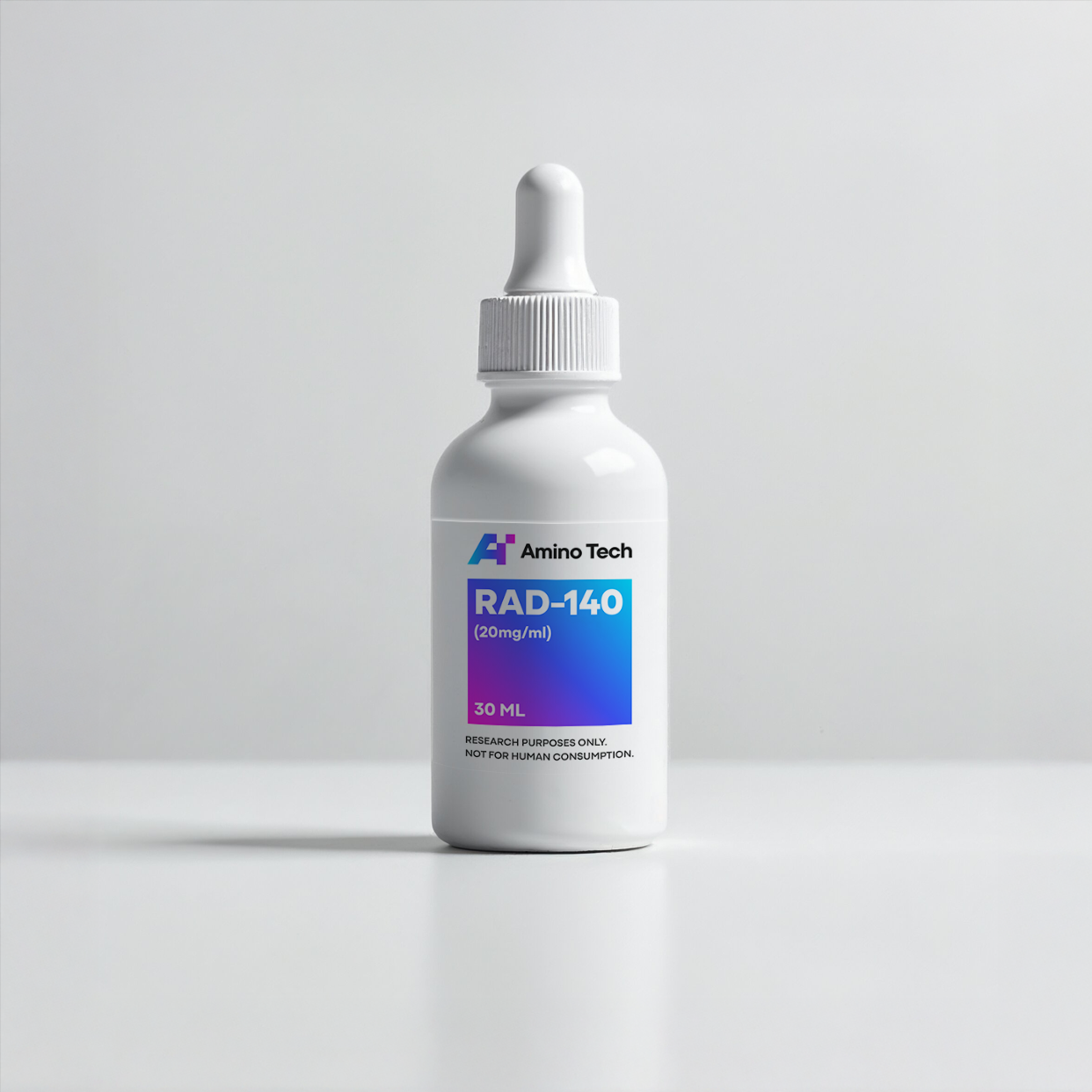

What is RAD-140?
RAD-140, also known as Testolone, is a selective androgen receptor modulator (SARM) originally investigated as a treatment for hypogonadism, a potential male contraceptive aid, and more recently as a candidate treatment for hormone receptor-positive breast cancer in women. As a SARM, it is designed to bind androgen receptors with high selectivity, producing anabolic effects in muscle and bone tissue while minimizing androgenic activity in organs like the prostate. It carries a notably long half-life of approximately 60 hours, which significantly affects how it should be dosed. RAD-140 is one of the more potent compounds in the SARM category and is capable of producing meaningful changes in body composition, strength, and aesthetics within a single cycle.
Mechanisms of Action
Selective androgen receptor binding activating androgen receptors in muscle and bone tissue with high affinity while exhibiting reduced androgenic activity in tissues like the prostate and skin, which is the core premise of the SARM mechanism
Anabolic signaling in skeletal muscle driving nitrogen retention, protein synthesis upregulation, and muscle fiber hypertrophy through AR-mediated gene transcription without the full androgenic burden of traditional steroids
Metabolic rate elevation with users commonly reporting difficulty maintaining weight on RAD-140, suggesting a meaningful increase in resting energy expenditure beyond what muscle gain alone accounts for
Neuroprotective activity observed in early rodent studies where RAD-140 demonstrated protective effects on neurons, potentially via androgen receptor signaling in brain tissue
Endogenous testosterone suppression via HPG axis feedback, with RAD-140 signaling through androgen receptors in a way that reduces LH and FSH output and suppresses natural testosterone production during use
Benefits
Significant muscle mass and strength gains with RAD-140 widely regarded as one of the most anabolically potent SARMs available, capable of meaningful recomposition and size improvements within an 8-week cycle
Improved body composition and cosmetics producing a harder, fuller, and more vascular look that is noticeable even at moderate doses, with strength increases that accompany the physique changes
Metabolic boost and fat loss support with many users reporting elevated metabolism and difficulty maintaining bodyweight, making it useful during recomposition phases
Potential gynecomastia treatment with early research suggesting RAD-140 may have a role in treating certain hormone receptor-positive breast cancers, and some male users reporting improvements in existing gyno tissue
Prostate health with some users reporting improvements in prostate-related markers, consistent with the selective androgenic profile that limits prostate stimulation compared to traditional androgens
Neuroprotective potential based on early preclinical data suggesting androgen receptor activity in neural tissue may confer protective effects on brain health
Dosing
Level | Daily Dose |
|---|---|
Beginner | 10 mg/day |
Intermediate | 15–20 mg/day |
Advanced | 25–30 mg/day |
RAD-140 has a half-life of approximately 60 hours, meaning it accumulates in the system with daily dosing. This long half-life should be factored into your dosing strategy as levels will build over time. Taking 10 mg about an hour before training is a practical approach that delivers a noticeable performance effect. Cycle length should not exceed 8 weeks and a proper PCT and test base are strongly recommended.
Warning: Do not run RAD-140 without a test base or a post-cycle therapy plan in place. Suppression of natural testosterone is significant and recovery without PCT can be slow and symptomatic. Monitor liver and kidney function during use, especially at higher doses or longer cycle lengths. Stack with an injectable joint formula if joint discomfort becomes an issue.
Safety Profile
Testosterone suppression the most significant concern with RAD-140 use, requiring proper PCT after each cycle to restore endogenous production and avoid prolonged hormonal imbalance
Hair loss reported by users with a genetic predisposition to androgenic alopecia, as androgen receptor activation can accelerate male pattern baldness even with selective compounds
Liver stress possible at higher doses or with extended cycles, warranting regular liver function monitoring and consideration of a liver support supplement during use
Kidney stress reported by some users, with the causation not yet fully established in research; staying well hydrated and monitoring kidney markers is advisable
Mood changes including irritability, mood swings, and in some cases increased aggression, with individual responses varying considerably
Cardiovascular effects including potential blood pressure elevation and lipid profile changes that should be monitored, particularly in users with pre-existing cardiovascular conditions
Joint pain reported by some users, manageable by stacking with an injectable joint support formula throughout the cycle
Unknown long-term effects as RAD-140 remains a relatively new compound with limited long-term human safety data available
Citations
Christiansen, A. R., et al. Selective androgen receptor modulators: the next generation of androgen therapy. PubMed. https://pubmed.ncbi.nlm.nih.gov/28984793/
Disclaimer: The information provided is intended solely for educational purposes and should not be considered a replacement for professional medical advice. All compounds referenced are not for human consumption.