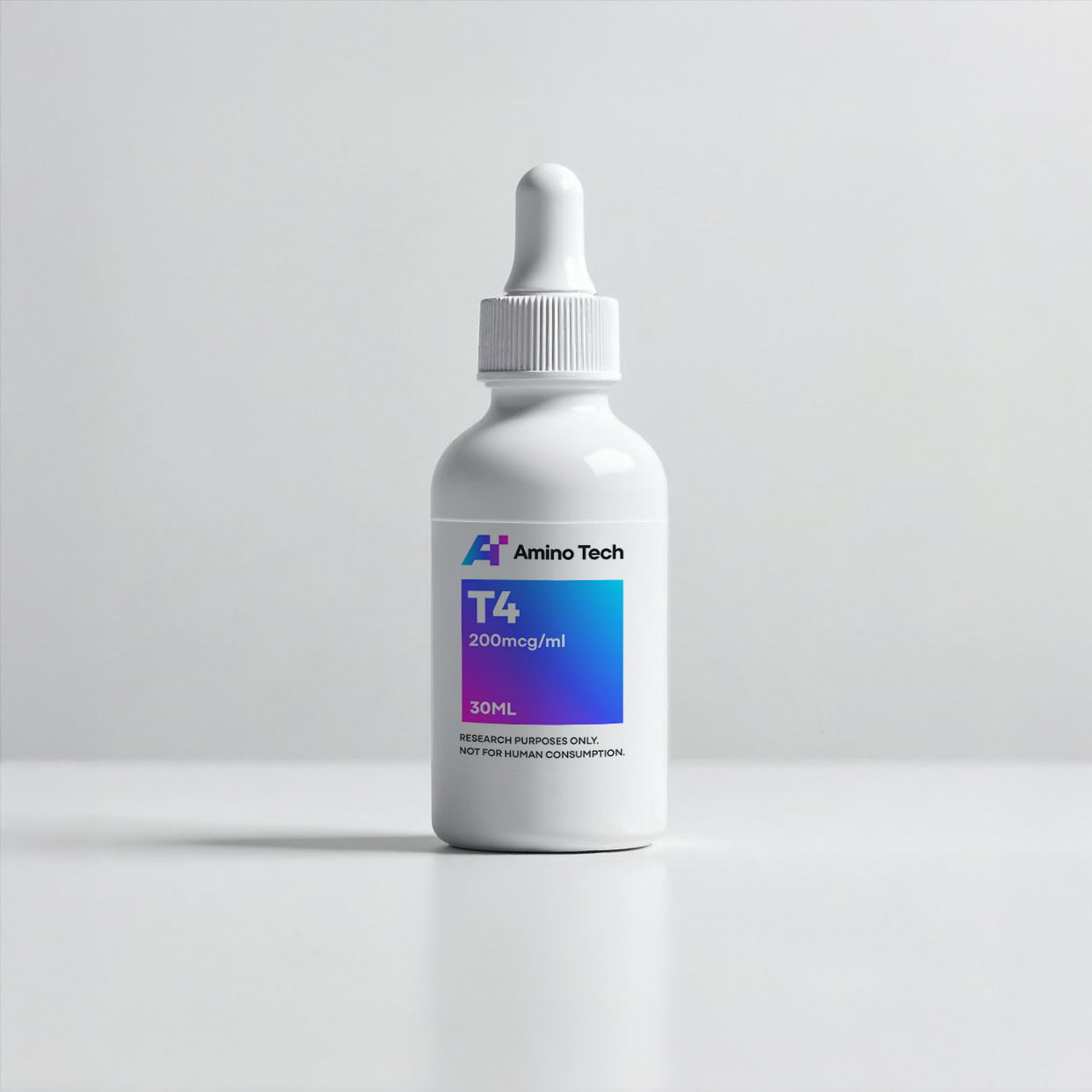

What is T4?
T4 (thyroxine) is one of the two primary hormones produced by the thyroid gland, alongside T3 (triiodothyronine). It circulates in the bloodstream and is converted in tissues into T3, which is typically considered the more “active” thyroid hormone at the cellular level. In performance discussions, T4 is framed as the baseline thyroid support lever and is often viewed as the foundation when T3 is used.
Mechanisms of Action
T4 is the upstream thyroid hormone that supports metabolic signaling by:
Serving as a T3 precursor: Converted into T3 in peripheral tissues, supporting downstream thyroid activity.
Regulating metabolic rate: Influences how quickly cells use energy from nutrients.
Supporting ATP production: Tied to cellular energy output and fatigue resistance signals.
Thermogenesis and temperature control: Helps maintain body temperature through energy expenditure signaling.
Protein synthesis support: Often discussed in relation to tissue repair and growth support pathways.
Benefits
Metabolism regulation: Supports stable metabolic function and energy expenditure.
Energy production support: May improve perceived energy via improved cellular energy output.
Body temperature control: Helps normalize thermogenesis and energy burn signals.
Protein synthesis support: Often referenced as supportive for recovery and tissue maintenance.
Foundational thyroid optimization: In many clinical frameworks, T4 is treated as the baseline hormone, and T3 is typically not used without it.
Body composition support: In bodybuilding contexts, optimizing thyroid levels is discussed for increased energy expenditure and improved fat metabolism signals.
Dosing
T4 is often taken once daily due to its longer duration.
Strength | Dose |
|---|---|
Low | 50 mcg per day |
Medium | 100 mcg per day |
High | 150 to 200 mcg per day |
Notes: A common approach is 100 mcg in the morning as a maintenance oriented dose, with titration upward only if a more aggressive approach is intentionally pursued. If T3 is used, T4 is frequently included alongside it to mirror common clinical replacement strategies.
Safety Profile
T4 is often described as the more “forgiving” thyroid option relative to high dose T3, but it is still capable of pushing the system too far when dosed aggressively or run long.
Side effects and risks:
Hyperthyroid symptoms: Rapid heartbeat, weight loss, anxiety, heat intolerance, and elevated stimulation signals when levels are excessive.
Bone density risk: Prolonged high thyroid signaling can increase bone loss and osteoporosis risk signals.
Cardiovascular strain: Palpitations, blood pressure elevation, and other cardiovascular stress signals at higher exposures.
Drug and hormone metabolism effects: Thyroid signaling can influence metabolic enzymes, which may alter how some drugs and estrogen related pathways are handled, potentially creating estrogenic symptom patterns or medication sensitivity changes.
Stacking
Thyroid Stack:
T4
T3
Disclaimer: The information provided is intended solely for educational purposes and should not be considered a replacement for professional medical advice. All compounds referenced are not for human consumption.